Loading...
THE NU STANDARD GUIDE
Expert guidance for a cleaner, healthier home.
Practical cleaning knowledge, surface care, and safety guidance—organized so you can act with confidence.
Surface-first
Start with the material before choosing method or chemistry.
Safety before strength
Escalate carefully, with compatibility and stop-points visible.

Search stays close to the feature so browsing feels guided, not like a raw index.
Knowledge path
Choose a topic, then use the guide cards to move from diagnosis to safer next steps.
Curated first
Featured paths through the library

Maintenance
Complete Guide to Cleaning Every Surface
A practical framework: choose the surface first, match the soil type, pick a compatible method family, and know when to stop and escalate.
Read guideStains
How to remove stains safely
A structured guide to matching stain-removal approaches to surfaces, contamination type, and damage risk.
Read guideSurfaces
When cleaning damages surfaces
A structured guide to how surface damage happens during cleaning, including abrasion risk, chemical sensitivity, moisture exposure, and finish disruption.
Read guideMore references

Maintenance
Best cleaners for appliances (how to choose)
Ovens, cooktops, and stainless fronts need different lanes—carbonized soil, glass-ceramic polish risk, and grain direction all change the playbook.
Read Guide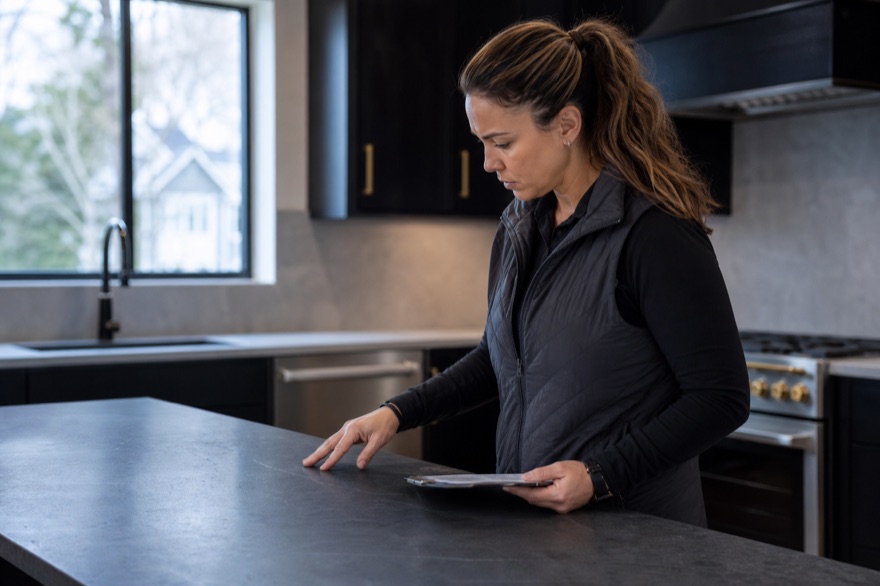
Maintenance
Best cleaners for bathrooms (how to choose)
Separate bath films, minerals, and biological growth so you do not acid-wash the wrong surface or confuse disinfection with soil removal.
Read Guide
Maintenance
Best cleaners for floors (how to choose)
Floors fail from mop residue, wrong dilution, and confusing scuffs with grease—use problem hubs and neutral floor lanes before chasing glossy coatings.
Read GuideMaintenance
Best cleaners for kitchens (how to choose)
Route kitchen soil to the right problem hubs, chemistry families, and product comparisons—grease, film, and touchpoints need different lanes.
Read GuideAnti-pattern
Why “all-purpose” cleaners aren’t universal
Marketing language ≠ stone-safe, wax-safe, or disinfecting chemistry in one bottle.
Read GuideAnti-pattern
Why “antibacterial” doesn’t mean clean
Kill claims require label dwell and starting soil removal—dirt can shield microbes.
Read GuideAnti-pattern
Why “natural cleaners” don’t always work
Natural is not a soil class. Biology, minerals, and films still need matched chemistry and technique.
Read GuideAnti-pattern
Why abrasive cleansers aren’t interchangeable
Oxalic polish chemistry ≠ quartz-safe daily—grain and acid matter more than brand color.
Read GuideAnti-pattern
Why acid cleaners damage stone
Many stones and sealers are acid-sensitive; etching is permanent, not residue.
Read GuideAnti-pattern
Why acid on grout lines is risky
Cementitious grout is porous—repeat acid can weaken joints and discolor sealers unevenly.
Read GuideAnti-pattern
Why aerosol foam doesn’t penetrate grout
Foam sits on top—porous joints need contact time and often mechanical help.
Read GuideAnti-pattern
Why all-purpose cleaners leave residue
Multi-surface formulas trade off rinse profile; too much product + weak rinse = haze and re-soil.
Read GuideAnti-pattern
Why baking soda scratches certain surfaces
Baking soda is abrasive in practice; glossy plastics, soft coatings, and polished metal can dull.
Read GuideAnti-pattern
Why bathroom creams misread on stone
Abrasive bathroom pastes can micro-scratch acid-sensitive or resin-filled stone finishes.
Read GuideAnti-pattern
Why bleach can make stains look better but not solve them
Oxidation can lighten chromophores while leaving film, damage, or embedded soil behind.
Read GuideAnti-pattern
Why bleach doesn’t remove dirt
Bleach oxidizes; it is not a surfactant-forward soil lifter for everyday grime.
Read GuideAnti-pattern
Why bleach isn’t a universal cleaner
Bleach is a strong oxidizer with narrow compatibility—great for some disinfection, wrong default for grease, stone, and many mixes.
Read GuideAnti-pattern
Why bucket water gets dirtier than it looks
Dissolved surfactant hides soil until you redeposit it on the next wall swath.
Read GuideAnti-pattern
Why caulk lines trap film
Silicone is soft and irregular—soil wedges in while wipes skate over the top.
Read GuideMethods & diagnosis
Why cleaning fails
A structured guide to the most common reasons cleaning underperforms, including method mismatch, residue issues, surface sensitivity, and contamination misidentification.
Read GuideAnti-pattern
Why cleaning without rinsing fails
Soil lifts into solution—if you leave solution behind, soil returns as film.
Read GuideAnti-pattern
Why coatings still show water spots
Hydrophobic layers change bead shape—not always mineral nucleation on the first rinse.
Read GuideAnti-pattern
Why cooktop cleaners aren’t oven cleaners
Glass-ceramic polish chemistry is tuned for scratch risk—not for baked-on caustic oven soils.
Read GuideAnti-pattern
Why degreasers damage some finishes
High pH and solvents attack coatings, painted cabinets, and some plastics.
Read GuideAnti-pattern
Why degreasers don’t remove limescale
Limescale is mineral-bonded; alkaline degreasers won’t replace acid-safe descaling where allowed.
Read GuideAnti-pattern
Why diluted bleach still stains textiles
Cellulosics and dyes react unpredictably—dilution doesn’t remove incompatibility.
Read GuideAnti-pattern
Why dish soap fails on hard water stains
Dish soap lifts oils; mineral bonding needs acid-safe descaling chemistry on tolerant surfaces.
Read GuideAnti-pattern
Why dish soap isn’t a disinfectant story
Surfactants lift soil well—kill claims and dwell live on disinfectant labels, not on Dawn-class SKUs.
Read GuideAnti-pattern
Why disinfectant dwell time is not optional
Kill claims are time-bound on the label—wipe-off in 5 seconds is often just wet dusting.
Read GuideAnti-pattern
Why disinfectants don’t clean surfaces
Disinfection is a kill step; soil removal still needs surfactants, rinse, and often a separate clean pass.
Read GuideAnti-pattern
Why disinfecting wipes leave streaks
Quat films and fast evaporation leave polymers and surfactant trails—especially on glossy hard surfaces.
Read GuideAnti-pattern
Why dry solvent sprays don’t emulsify kitchen grease
Fast-evaporating sprays move oil around—surfactant water phases still do the heavy lifting on hoods.
Read GuideAnti-pattern
Why drying beats more product
Evaporation deposits solutes—controlled drying removes the last dirty water layer.
Read GuideAnti-pattern
Why enzymes don’t fix mildew staining
Enzymes help some biological films—pigmented staining and porous grout may need different removal or remediation.
Read GuideAnti-pattern
Why enzymes don’t work on grease
Enzymes target biological soils; fryer-grade lipids need surfactants and often alkaline degreasers.
Read GuideAnti-pattern
Why enzymes need dwell time
Biological chemistry works on contact time—spray-and-wipe often ends before proteins break down.
Read GuideAnti-pattern
Why fabric refreshers don’t sanitize laundry
Soft-surface sprays are not wash-cycle sanitizers—contact, dilution, and fiber saturation differ.
Read GuideAnti-pattern
Why floor cleaners can leave film
Too much product, dirty mop water, or skipping rinse leaves surfactant polymers that read as haze and tack.
Read GuideAnti-pattern
Why fragrance ≠ cleaning power
Scent masks perception; it does not remove soil chemistry.
Read GuideAnti-pattern
Why glass cleaners don’t fix haze
Haze can be mineral, polymer coating damage, or etched glass—surfactant glass sprays only solve the easy slice.
Read GuideAnti-pattern
Why glass cleaners don’t work on grease
Glass cleaners optimize clarity films—not hood-level lipids. Grease needs surfactant load and rinse discipline.
Read GuideAnti-pattern
Why glass spray on grease makes smears
Glass chemistry is not surfactant-loaded for lipids—you thin oil into smear tracks.
Read GuideAnti-pattern
Why hard water keeps coming back
You removed film, not the water source—new droplets redeposit minerals immediately.
Read GuideAnti-pattern
Why hot water alone won’t cut grease
Heat lowers viscosity but does not emulsify—surfactants carry oil into rinse water.
Read GuideAnti-pattern
Why labels matter on stone and coatings
“Works everywhere” marketing breaks first on acid-sensitive stone and factory coatings.
Read GuideAnti-pattern
Why lemon and stone don’t mix
Citric acid is still acid—many marbles and limestones etch; sealers degrade unevenly.
Read GuideAnti-pattern
Why Lysol doesn’t cut baked-on grease
Disinfectant-first formulations are not surfactant-heavy degreasers—soil shields both microbes and chemistry.
Read GuideAnti-pattern
Why melamine erasers dull gloss finishes
Micro-abrasion removes marks—and also micro-scatters gloss into haze.
Read GuideAnti-pattern
Why microfiber matters
Split fibers grab and hold soil; cotton and paper often redistribute it.
Read GuideAnti-pattern
Why neutral cleaners don’t remove limescale
pH-neutral maintenance lifts daily soil—it does not dissolve calcium crystals bonded to glass or fixtures.
Read GuideAnti-pattern
Why odor neutralizers don’t remove grease
Binding VOCs is not emulsifying lipids—grease still feeds smell and re-soils surfaces.
Read GuideAnti-pattern
Why odor sprays don’t remove odors
Many sprays mask or bind lightly; source removal + right chemistry class wins persistent odor.
Read GuideAnti-pattern
Why one-direction wiping causes streaks
Re-wiping spent product without a clean edge redistributes residue in visible bands.
Read GuideAnti-pattern
Why oven cleaners damage finished surfaces
High-alkaline cavity chemistry dissolves lipid soils—and also attacks paints, films, and aluminum trims.
Read GuideAnti-pattern
Why overwet mops leave residue
Floors dry from the edges inward—puddles concentrate surfactant and soil in low spots.
Read GuideAnti-pattern
Why paper towels scratch surfaces
Wood pulp fibers and embossing act like micro-abrasives on gloss plastics, soft coatings, and some glass.
Read GuideAnti-pattern
Why peroxide bubbles don’t equal clean
Oxygen release shows reaction—not completion. Soil can remain while fizzing feels productive.
Read GuideAnti-pattern
Why polish doesn’t fix mineral damage
Polish can improve gloss temporarily—it does not rebuild acid-etched structure or remove embedded crystals.
Read GuideAnti-pattern
Why powder cleansers cloud glass
Alumina/silica abrasives cut film—and can frost glass or coatings when pressure exceeds tolerance.
Read GuideAnti-pattern
Why rinsing tools prevents streaks
Sponges and mop heads load chemistry—without rinse, you paint residue back on.
Read GuideAnti-pattern
Why rust keeps returning after cleaning
You removed orange powder—not the iron source still wetting the metal or stone.
Read GuideAnti-pattern
Why sanitizers don’t remove visible soil
Kill claims need contact with organisms—grease and dust physically block that contact.
Read GuideAnti-pattern
Why scrubbing harder doesn’t fix buildup
Wrong chemistry stays wrong—force just damages finish while soil remains.
Read GuideAnti-pattern
Why shower sprays don’t remove heavy buildup
Daily maintainers reduce new film—they rarely bust mature soap-mineral complexes without dwell + mechanical help.
Read GuideAnti-pattern
Why soap scum isn’t just soap
Hard water minerals react with surfactants—film is often soap + mineral complex.
Read GuideAnti-pattern
Why squeegee skips leave spots
Missed bands dry at different rates—minerals nucleate exactly where water last sat.
Read GuideAnti-pattern
Why stainless polish isn’t a degreaser
Polish oils improve grain appearance—they do not emulsify hood-level lipids safely.
Read GuideAnti-pattern
Why steam alone won’t remove films
Heat re-softens some soils but still needs wipe chemistry and capture—steam without surfactant often smears.
Read GuideAnti-pattern
Why steel wool damages finished surfaces
Metal fibers embed and scratch; rust-prone fragments stain grout and stainless grain.
Read GuideAnti-pattern
Why the same cloth room-to-room spreads soil
Cross-contamination moves bacteria and oils from high-soil zones to clean-looking finishes.
Read GuideAnti-pattern
Why too much product causes residue
Surfactant and polymer films left behind read as “still dirty” and attract dust faster.
Read GuideAnti-pattern
Why using too much cleaner makes things worse
More product increases film, streak risk, and slip hazards—without increasing soil removal.
Read GuideAnti-pattern
Why ventilation matters for fumes
Inhalation risk scales with concentration × time—small bathrooms and closed kitchens compound exposure.
Read GuideAnti-pattern
Why vinegar doesn’t remove grease
Vinegar is weak acid and surfactant-poor—great for some films, wrong default for kitchen lipid soils.
Read GuideAnti-pattern
Why vinegar leaves streaks on glass
Acid can shift mineral film but surfactant-poor vinegar often redeposits and streaks without rinse discipline.
Read GuideAnti-pattern
Why water alone doesn’t clean grease
Oil is non-polar; water needs surfactants to emulsify and rinse lipids.
Read GuideAnti-pattern
Why wood oil soap isn’t stone sealer
Murphy-class oil soaps condition wood narratives—they don’t re-seal porous stone.
Read GuideAnti-pattern
Why you shouldn’t mix cleaners
Mixing creates toxic gas risk, neutralizes chemistry, and voids label safety assumptions.
Read GuideAnti-pattern
Why you shouldn’t mix vinegar and baking soda
You mostly make salt water and CO₂—neutralizing both cleaners’ intended jobs.
Read GuideAnti-pattern
Why you shouldn’t use oven cleaner everywhere
Oven chemistry is caustic, fume-heavy, and surface-specific—counters and floors are not ovens.
Read GuideSurface-First Guidance
Safety Before Strength
Know When to Stop
Professional Standards