surfaces
Cleaning Stainless Steel
Professional guidance for cleaning stainless steel without streaking, dulling, scratching, or leaving oily residue behind.
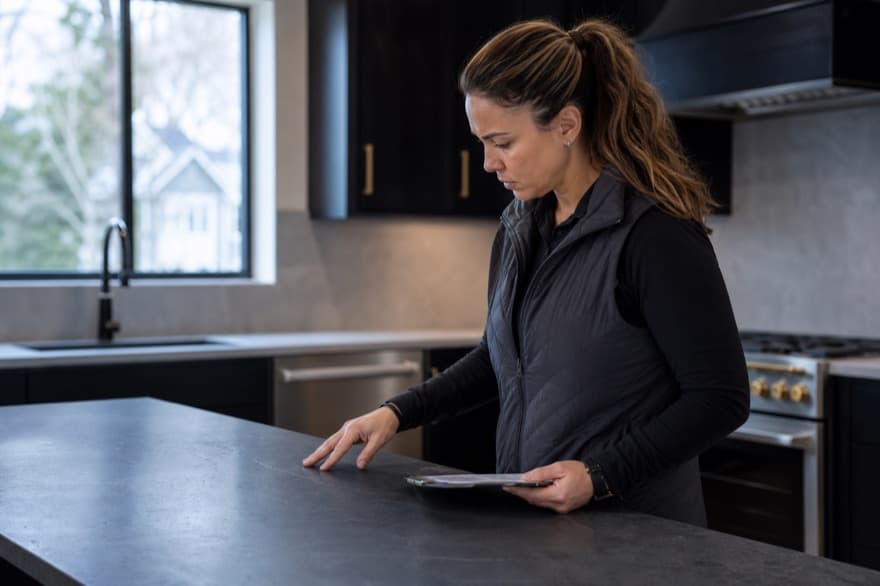
Surfaces example
Example surface context for care and compatibility guidance.
What This Is
Stainless steel cleaning is a finish-sensitive maintenance process used on appliances, fixtures, and other metal surfaces where smudging, streaking, and directional grain matter.
Why It Happens
Stainless steel shows fingerprints, oils, cleaner residue, and water spotting quickly. Lighting and brushed grain patterns can exaggerate even minor finishing mistakes.
What People Do Wrong
People use too much product, wipe against the grain, use abrasive pads, or fail to remove oily residue fully. They also confuse water spotting, grease, and cleaner film.
Professional Method
Dry remove loose dust first, identify the actual residue, use low-residue or grease-appropriate chemistry as needed, wipe with the grain, and finish dry with clean microfiber to eliminate streaking.
Data and Benchmarks
Finish quality depends more on residue control and towel discipline than strong chemistry. Overapplication is one of the biggest causes of poor-looking stainless steel.
Professional Insights
Stainless steel often punishes excess. The cleanest-looking finish usually comes from the lightest effective chemistry and the best towel control.
Why This Surface Behaves Differently
Stainless steel is durable but appearance-sensitive. Brushed grain, polish residue, lighting, and fingerprints make towel technique and product load more important than raw cleaner strength.
Common Contamination Patterns
- Handles and fronts collect fingerprints, lotion, food oils, and sanitizer residue.
- Range-adjacent panels collect grease film and cooked-on residue.
- Sinks, trim, and wet appliance zones collect water spotting and mineral film.
Safe vs Unsafe Chemistry
Mild degreasing and neutral maintenance work well when residue is fully removed. Harsh acids, chlorine residue, abrasive powders, and steel wool can change appearance or create corrosion-looking defects.
Abrasion and Polish Sensitivity
Always read the grain before increasing pressure. Polish is an appearance step after cleaning, not a way to hide grease, sticky residue, or dirty towel trails.
Maintenance Rhythm
Clean high-touch fronts frequently before oils polymerize. Deep-degrease range and hood-adjacent stainless before applying polish. Dry sinks and wet trim in hard-water homes.
Compatibility Graph
- Related problems: fingerprints and smudges, grease buildup, appliance grime, water spotting, finish scratches.
- Related methods: degreasing, neutral surface cleaning, touchpoint sanitization.
- Related tools: clean microfiber, detail cloths, non-scratch pads only after compatibility is confirmed.
- Related surfaces: appliances, sinks, fixtures, glass.
Visual Recognition Cues
Directional streaks usually point to residue or towel overload. Fine linear marks that catch the light are likely abrasion. Rainbow or brown heat tint near cooking areas may not be removable soil.
Commercial and Professional Context
Shared kitchens, office breakrooms, and commercial appliance banks need shorter degreasing cycles and strict towel separation. Professionals prioritize grain direction, residue removal, and electronics-safe moisture control.
When to Call a Professional
Call a professional when streaking persists, when residue has layered over time, or when specialty appliance finishes require more careful treatment.