surfaces
Cleaning Glass Surfaces
Professional guidance for cleaning interior glass surfaces without streaking, haze, scratching, or mineral confusion.
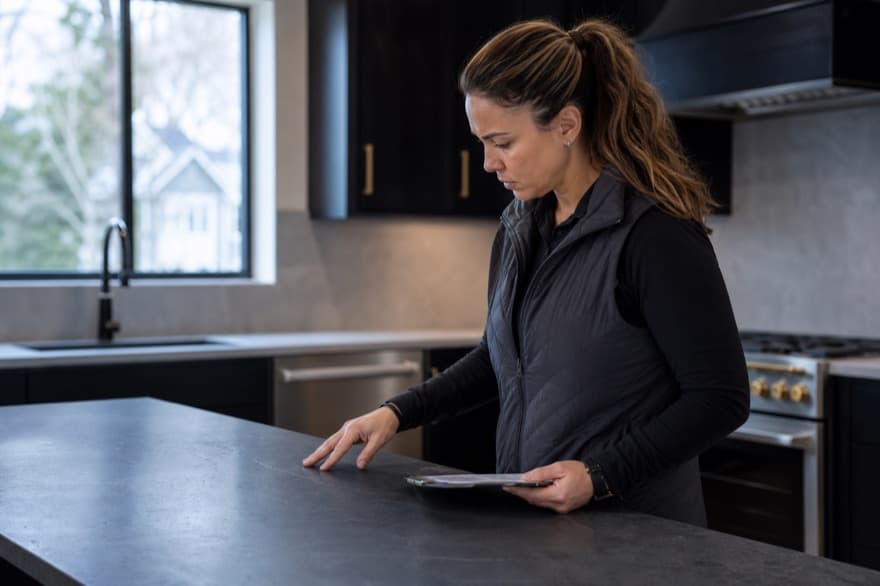
Surfaces example
Example surface context for care and compatibility guidance.
What This Is
Glass surfaces require low-residue cleaning, controlled towel technique, and clear differentiation between routine soil and bonded mineral residue. This applies to mirrors, windows, glass tables, doors, and decorative glass.
Why It Happens
Glass highlights residue more than many other materials because it reflects light strongly. Fingerprints, overspray, dust film, and cleaner residue all show quickly, especially when lighting is directional.
What People Do Wrong
People often use too much product, use dirty towels, confuse mineral buildup with simple film, or use abrasive tools that permanently mark the surface.
Professional Method
Identify whether the issue is routine soil or mineral buildup. Remove loose dust first where needed, apply a low-residue cleaner lightly, wipe with clean microfiber, and dry-finish with a separate clean towel face or dedicated towel.
Data and Benchmarks
Routine glass cleaning depends more on towel quality and low-residue finishing than on strong chemistry. Persistent cloudiness after proper cleaning may indicate mineral etching, not removable soil.
Professional Insights
Glass care is a visibility discipline. Minor residue that would be invisible on many materials becomes obvious on glass, which is why process control matters so much.
Why This Surface Behaves Differently
Glass is non-porous but visually unforgiving. Fingerprints, lint, minerals, overspray, and towel residue show immediately because the surface reflects light and reveals edge-to-edge clarity.
Common Contamination Patterns
- Fingerprints collect around handles, table edges, doors, and mirrors.
- Cleaner overspray creates haze or wipe-direction streaking.
- Hard water creates white spots, rings, and cloudy mineral film where droplets dry.
Safe vs Unsafe Chemistry
Low-residue glass cleaning is the routine lane. Hard-water removal is only appropriate when mineral deposits are confirmed and nearby frames, stone, coatings, or metals can tolerate the chemistry.
Abrasion Sensitivity
Abrasive grit trapped in towels can scratch glass. Metal blades, rough pads, and dry scraping carry higher risk on coated, tinted, etched, or decorative glass.
Maintenance Rhythm
Clean touch zones before oils spread across the pane. Dry wet glass in hard-water areas. Treat mineral deposits early before they shift from removable buildup into etching risk.
Compatibility Graph
- Related problems: streaking on glass, hard-water deposits, fingerprints and smudges, cloudy glass.
- Related methods: glass cleaning, hard-water deposit removal, neutral surface cleaning near frames.
- Related tools: clean microfiber, squeegee, detail cloth.
- Related surfaces: shower glass, mirrors, fixtures.
Visual Recognition Cues
Directional streaks usually mean towel or product residue. Round spots point to evaporation minerals. Cloudiness that does not shift after proper cleaning may be etching or coating damage.
Commercial and Professional Context
Large panes, storefront-style interior glass, and high-glare spaces need stricter towel rotation and edge control. Professionals identify coatings before escalating to restoration pads or stronger descaling.
When to Call a Professional
Call a professional when haze persists, when large panes require restoration-quality results, or when shower and architectural glass may have mineral damage.